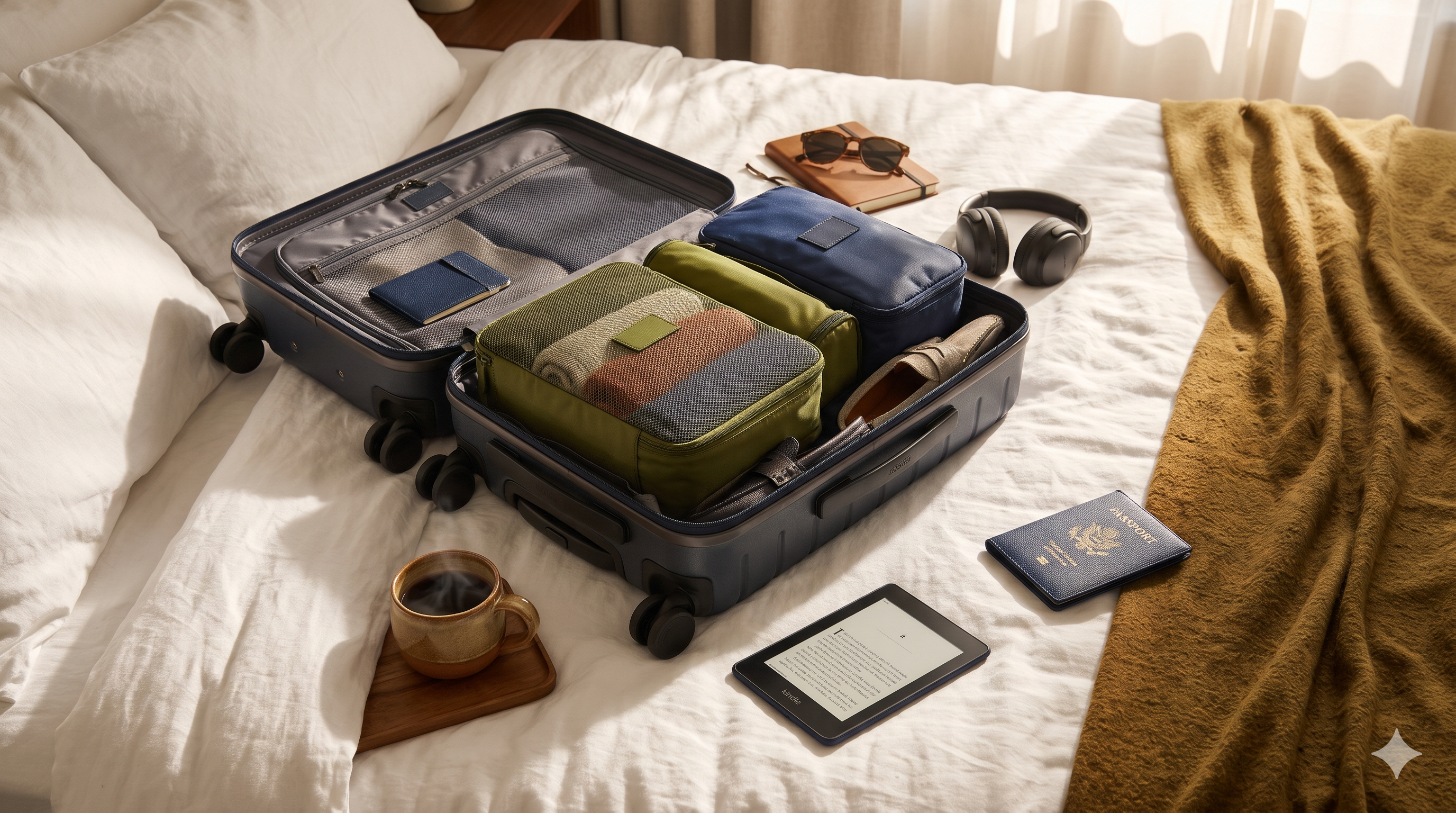
For about forty years, buying a suitcase in India was a decision you made once, reluctantly, and forgot about.
You walked into a shop near the station or a department store. You picked from a wall of near-identical hard shells in grey, maroon and navy. You haggled a little over the discount. The bag lasted a decade, mostly because nobody wanted to go through the exercise again.
Then a company that started with a single product in a country that was about to stop travelling decided that the exercise itself was the problem.
That company is Mokobara, and what it did to the Indian luggage market over the last six years is one of the cleaner case studies in consumer brand building you will find.
The category nobody thought needed fixing
Luggage in India was a quiet oligopoly. Three players, VIP, Samsonite and Safari, held roughly 99% of the organised market in 2020 according to one analysis of the category, and even today the top three still control about 86% of an organised market worth roughly ₹16,000 crore.
When three brands own a category, nobody inside it feels urgency. The product is functional. The distribution is entrenched. The customer buys on price, warranty and whichever shop happens to be nearby.
This is exactly the situation where an outsider with a point of view can get in. Not because the incumbents are bad, but because they stopped asking what the customer actually did with the product between purchases.
Two founders, one irritation
Sangeet Agrawal and Navin Parwal came out of Urban Ladder, the online furniture company. They had spent years learning what happens when you take a dull, offline-first category and rebuild it around design and a better buying experience.
Their bet was simple to state and expensive to execute: luggage can be a design product, and Indian travellers, especially the younger, flying-more-often ones, would pay for a bag that felt considered.
Investors did not agree. By most accounts the founders were turned down by 33 investors before one said yes. One reported comment was that the business would never cross ₹15 crore in revenue.
They also spent around 18 months field-testing a single prototype before there was any revenue to show for it.
I find that detail more instructive than the funding numbers. Most founders ask whether the market exists. These two spent a year and a half asking whether the product was actually good, and only then asked anyone to fund the answer.
One product, then a system
Mokobara launched in early 2020 with a single product, a cabin trolley. A narrow launch looks timid until you realise what it buys you: every ounce of design effort, every customer review and every marketing rupee points at one thing. When that one thing works, you have a reference product that makes the second and third launches cheaper to sell.
Then the timing got strange. The seed round closed in March 2020, the same month the pandemic shut down travel. A luggage startup with almost no one travelling is the kind of situation that ends companies.
Mokobara held. The company stayed small and disciplined through the dead months, kept refining the product, and built an online base before the airports reopened. When travel came back, it came back for people who had been scrolling brands for two years and wanted something better than what their parents carried.
What it actually changed
Here is where I think the real shift happened. Mokobara did not just sell a nicer bag. It changed four assumptions about the category.
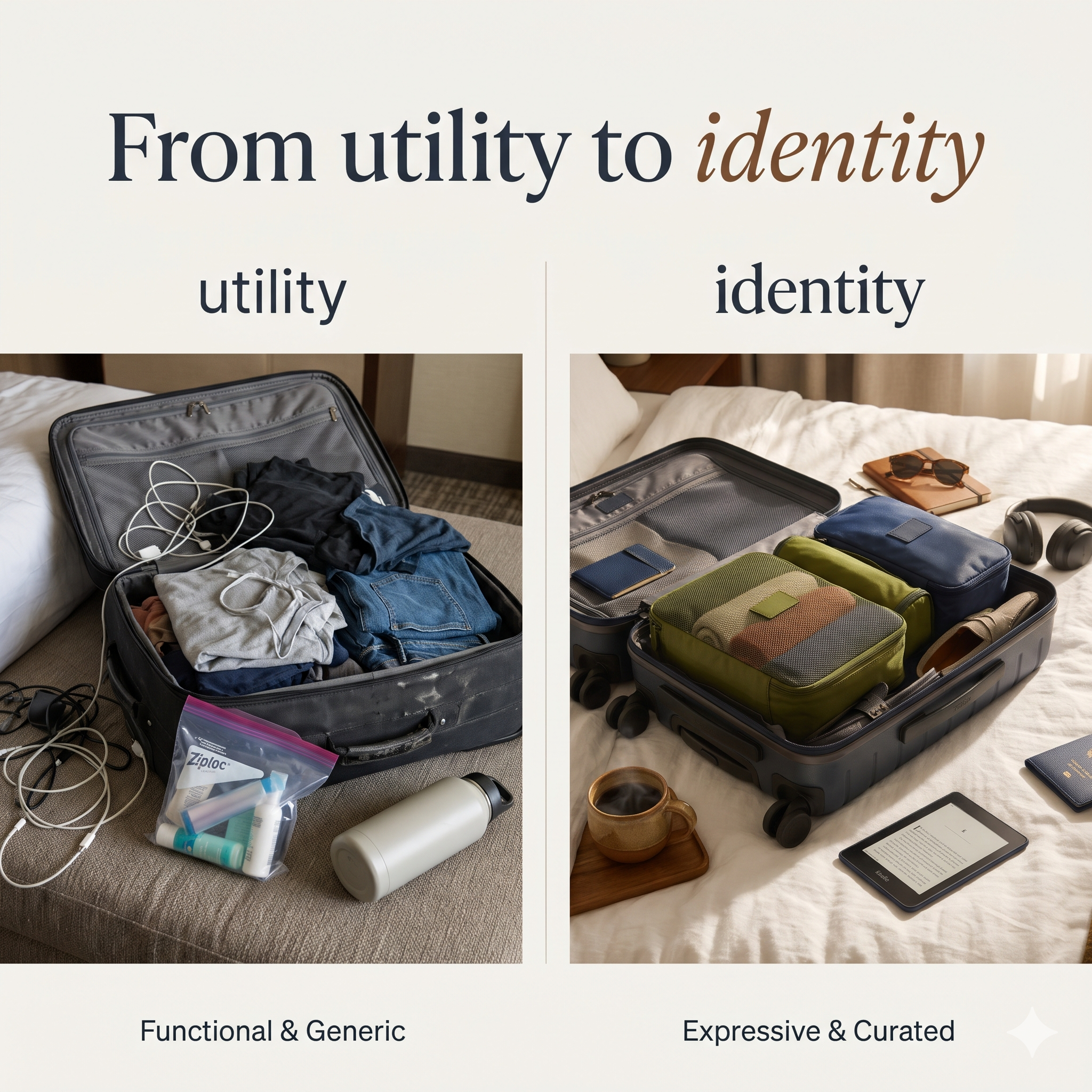
Luggage became an accessory. Colour, finish, silhouette and the small details of how a bag opens and organises began to matter. The product moved from "something you own because you travel" to "something that says how you travel." That is a pricing power argument, not an aesthetic one. Once a product carries identity, you stop comparing it on discount percentage alone.
The buying journey moved online first. Legacy brands sold through dealers and department stores. Mokobara started on its own website and on marketplaces, which meant it owned the customer data, the reviews and the repeat-purchase loop from day one. Offline came later, and on its own terms.
Offline became a brand tool, not a crutch. The company opened its first stores in Bengaluru, Delhi, Mumbai and Pune, then pushed into a first international outlet in Dubai in early 2025. It now runs roughly 50 stores, has moved from mall kiosks toward standalone high-street locations like its South Extension flagship in Delhi, and is putting real money into airports. An airport store matters for a simple reason: it sits in front of a traveller at the exact moment they are thinking about their bag.
The product range stretched beyond the trolley. Backpacks, totes, slings, wallets, packing cubes and other travel accessories turned a one-time purchase into a relationship. A customer who buys a cabin bag at 27 has a reason to come back for the next trip.
The numbers behind the story
The revenue curve is steep enough to be worth laying out.
FY22: about ₹12 crore
FY23: about ₹53 crore
FY24: about ₹117 crore
FY25: about ₹230 crore in operating revenue, up around 97% year on year.
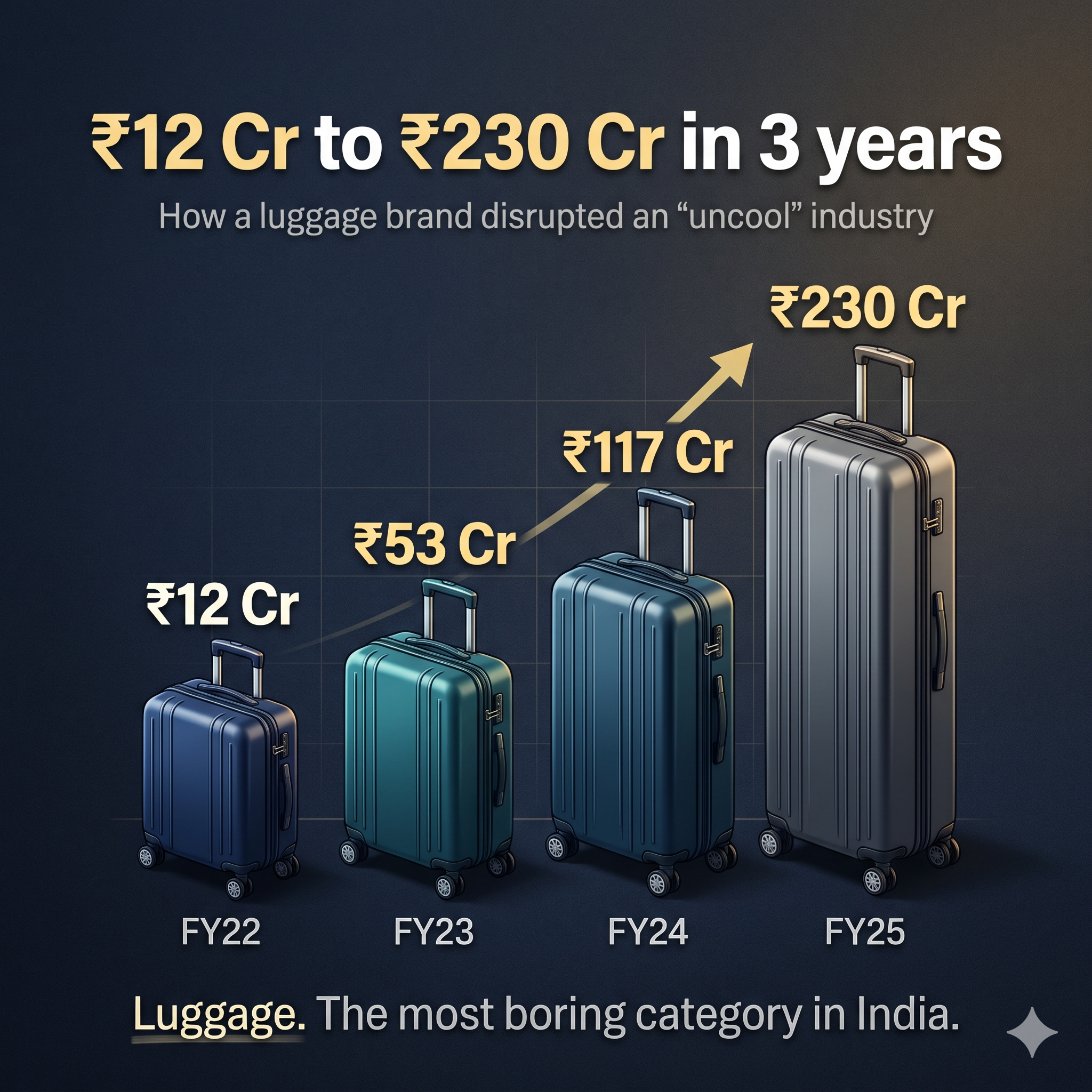
That is close to a twentyfold jump in three years, and the company was reported as roughly breakeven-to-modest-loss territory in FY25, with a net loss in the region of ₹10 crore against that revenue. Advertising and marketing spend was about ₹46 crore, close to a fifth of revenue.
Management has publicly pointed at ₹500 crore in revenue by FY27, built on more stores, deeper reach into Tier II cities and airport retail, and further international moves.
I would treat that target the way I treat any forward-looking number in a pitch: as intent, not forecast. But the direction is not in doubt.
The money followed the traction
Funding came in stages, each tied to proof rather than promise.
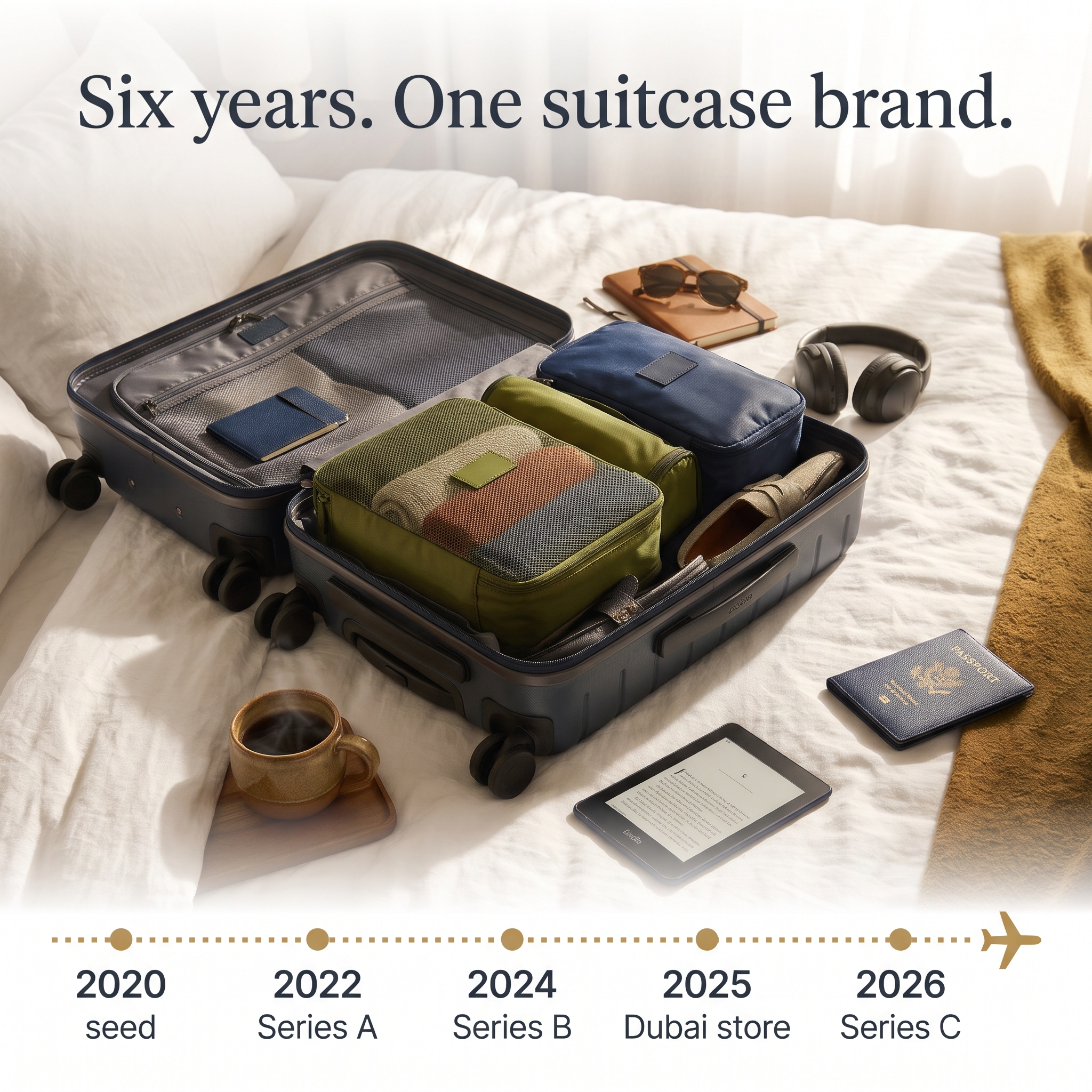
Seed, March 2020: early capital led by Sauce.vc, with angels reported to include names from the Indian consumer startup world and actor Deepika Padukone.
Series A, July 2022: about $6.5 million from Saama Capital and Sauce.vc, aimed at research, design and the first experience centres.
Series B, February 2024: about $12 million led by Peak XV Partners (formerly Sequoia India), reported at a valuation near ₹700 crore.
Series C, September 2026: about ₹170 crore (roughly $18 million), led by Sauce.vc with Peak XV, AYRA Ventures and Niveshaay participating. One report puts the post-money valuation near ₹1,930 crore, a bit under three times the Series B figure.
Notice the pattern. Sauce.vc was there at the seed and led the Series C, six years on. That kind of continuity is rare in venture, and it usually means the early backer saw the same thing in year one that the numbers now show.
What it did to the incumbents
This is the part the legacy players would rather not discuss.
Reporting on the category describes VIP, the largest player, losing share over the past five years, with its stock falling around a quarter in a twelve-month stretch amid competition, a management reshuffle and debt worries. Samsonite saw sales fall 18% in 2024 and its mass brand American Tourister reported a 31% decline in the December 2024 quarter. Safari, the stronger performer of the three, still reported a profit dip of 27% in the last quarter of calendar 2024.
I would not pin all of that on Mokobara. Nasher Miles, Assembly and Uppercase are chasing the same customer, and cyclical factors matter. But the direction of travel is clear. The legacy brands are now spending on youth appeal, bringing in consultants to fix e-commerce, and pushing into premium sub-brands. When incumbents start copying your playbook, you have changed the category.
Mokobara has also had to defend its own ground. In 2025 it won an interim injunction in the Delhi High Court against a brand accused of copying its design. If you are being copied, you have built something worth copying.
What other brand builders can take from this
I look at cases like this the way I would look at a client's operating model: what is the repeatable mechanism underneath the story?
Pick a category where the customer is quietly dissatisfied. Luggage was functional but joyless. Nobody was fighting for the customer's affection.
Spend the pre-revenue time on the product. Eighteen months of field testing before scale is boring and unglamorous, and it is why the first bag worked.
Narrow before you widen. One product let the company concentrate its learning. The accessory range came after the core was proven.
Own the customer first, then add stores. Online-first gave Mokobara data and repeat behaviour that most legacy dealers never saw. Offline then amplified a brand that already had pull.
Treat retail as a signal. Airport and high-street stores are marketing assets as much as sales channels.
The risks that are still on the table
It would be lazy to end on the success story alone.
Marketing at about 20% of revenue is not cheap. Airport and standalone retail eat capital through deposits, fit-outs and inventory. Competitors are well funded and learning quickly. Discounting pressure is likely to rise as D2C brands fight for share. And the legacy giants still hold the distribution muscle and the dealer relationships that take years to replicate.
The question for the next three years is whether Mokobara can hold premium pricing while it scales into Tier II cities, where price sensitivity is higher and brand awareness is thinner.
Where this leaves the Indian suitcase
Five years ago, a suitcase was a utility you replaced when the wheel broke. Today a meaningful slice of Indian travellers choose their bag the way they choose a pair of shoes: with an eye on how it looks, how it works, and what it says about them.
Mokobara did not invent that shift. It saw it early, built the product to match, and had the patience to survive a pandemic while doing it.
The suitcase stopped being boring. That is the whole story, and it took two founders, 33 rejections and one very stubborn prototype.
If you are building a brand in a category that looks settled, which boring product in your own industry is quietly waiting for the same treatment?

Written by
Bivas Mishra
No comments yet. Be the first to share your thoughts!